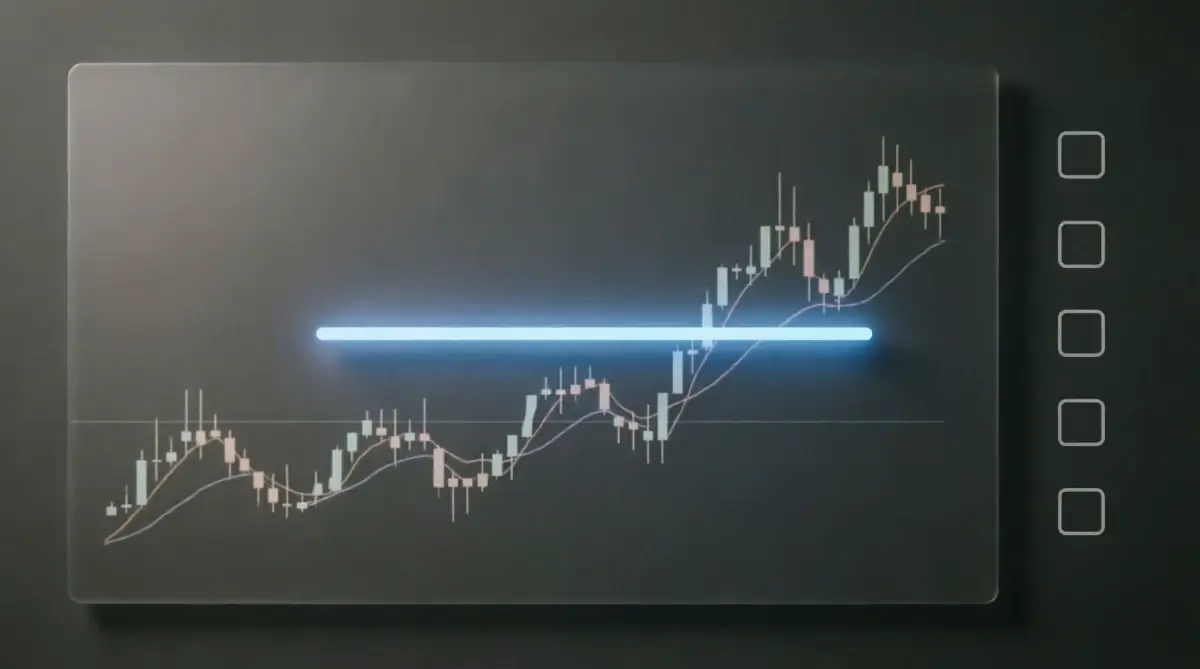
I have been the trader who turned small account into large gains, only to give it all back when the randomness played out the feeling of a few big wins tricks the mind into believing that skill has replaced randomness, and that belief is the foundation of a future crash. A lucky streak is just short‑term variance wearing a convincing mask, and until I recognized that, I was lucky to repeat the cycle.
The separation from a skilled probability player starts with admitting that early success was never a sign of mastery, and this article walks you through every distinction I have learned from risk management to patience to the shape of your equity curve so you can stop being lucky and start being skilled.
The Lucky Trader Who Mistook a Streak for Mastery
I have been that lucky trader who turned small deposits into large gains, only to give it all back. The feeling of a few big wins tricks the mind into believing that skill has replaced randomness, and that belief is the foundation of a future crash. A lucky streak is just short‑term variance wearing a convincing mask, and until I recognized that, I was doomed to repeat the cycle the separation from a skilled probability player starts with admitting that early success was never a sign of mastery.
The lucky trader lives in a world of extremes every outcome is magnified because it is tied directly to self‑worth. A winning trade feels like genius confirmed; a losing trade feels like personal failure. That emotional intensity is the fuel of the cycle: it drives the oversized bets after wins, the revenge trades after losses, and the constant search for the next big score. A skilled probability player, by contrast, lives in a world of calm repetition. The outcomes are data points, not verdicts, and the only thing that matters is whether the plan was followed.
The Illusion of Mastery After a Few Big Wins
Hitting a couple of large returns made me feel that I had finally cracked the market’s code. That confidence was dangerous because it was built on a tiny sample of outcomes that could easily reverse a skilled player knows that a few wins prove nothing about long‑term expectancy.
The illusion is seductive because it arrives wrapped in evidence. The account is up, the trades were profitable, and the mind races to construct a narrative of skill. I now recognize that narrative as the ego’s handiwork, and I stop it by checking my journal. If my last 5 trades were winners yet 2 of them broke my risk rules, the narrative collapses the data does not lie, and the skilled player trusts the data over the feeling.
The illusion of mastery distorts how I process feedback. When I believed I was skilled, I dismissed losing trades as anomalies and highlighted winning trades as proof. That selective perception prevented me from seeing the true expectancy of my approach. Now, I record every trade without filtering, and the full record tells the real story. The skilled player seeks the complete data, not the comforting highlights.
Turning Small Deposits into Large Gains, Then Giving It All Back
I repeated the pattern several times: growing an account quickly, feeling invincible, and then losing everything through oversized positions. The cycle was painful, yet it taught me that unchecked confidence after a winning streak is the fastest path to a crash. Real skill is measured by what remains after the luck runs out.
Each cycle followed a similar pattern a modest deposit, a few trades that go my way, the account doubles even triples I begin to believe I have figured out trading. Then a trade does not go as planned, and because my size has grown with my confidence, the loss is devastating. A single bad trade can erase weeks of gains. I now understand that the crash was not the market’s fault; it was the direct result of letting wins inflate my risk beyond the edge’s design. The skilled player keeps size constant regardless of recent outcomes.
The pattern of giving back gains taught me about the asymmetry of risk and reward. A 50% loss requires a 100% gain to recover. That math is brutal, and it is why protecting capital is more important than growing it. The skilled player focuses on the downside first, because the upside takes care of itself when the downside is controlled.
Why Luck Disguises Itself as Skill in the Short Run
Over a small number of trades, randomness can produce a string of wins that looks like genius yet is simply a favourable draw. I used to credit my own intelligence for outcomes that were entirely statistical noise the probability player sees luck for what it is and refuses to let it rewrite the risk rules.
The disguise works because the human mind is looking pattern to predict the next move a sequence of wins it invents a cause: superior analysis, a new indicator, a gut feeling. The true cause randomness is invisible and unsatisfying, so the mind rejects it. I have trained myself to look at a winning streak and say, “This is just variance. The edge has not changed. The risk rules remain the same.” That sentence is my shield against the illusion.
The disguise of luck works because the market provides just enough confirming evidence to keep the illusion alive. A lucky trader might have a 60% win rate over 20 trades and feel brilliant. The skilled player knows that a 60% win rate over 20 trades is statistically meaningless. I now wait for at least 100 trades before I even begin to evaluate my win rate. The larger sample reveals the truth that the small sample concealed.
The Moment I Realized I Had Been Lucky, Not Skilled
The realization came when I reviewed my full trade history and saw that my winning streaks were always followed by larger losing streaks that wiped out the gains. Skill does not produce a spike and crash; process consistency does that moment of honesty was the beginning of a genuine probability approach.
I sat down with a year of trade data and plotted the equity curve. The pattern was unmistakable: sharp rises followed by cliff‑like drops, repeated over and over. Each spike corresponded to a period where I had increased my size after wins; each crash corresponded to the inevitable losing streak that followed. The data did not lie. I had been riding waves of variance, not demonstrating skill that evidence killed the lucky trader identity and made room for the skilled player to emerge.
The moment of realization was painful yet necessary I printed my equity curve and circled every spike and crash. Seeing the pattern on paper, in my own handwriting, made it undeniable. I keep that printout in my journal as a reminder of who I used to be and who I refuse to become again.
How a Skilled Probability Player Sees Luck for What It Is
A skilled player understands that luck is nothing more than short‑term variance, a temporary tilt in the random distribution. I no longer celebrate a winning run as a personal victory because I know it could reverse at any moment without my edge being broken. That perspective keeps me grounded, protecting both my risk decisions and my emotional state.
This understanding is not intellectual alone; it is visceral I have lived through enough cycles of winning and losing to know, in my body, that a streak is not a permanent state. The feeling of invincibility that used to follow a few winners now triggers a warning response. I have trained myself to associate that feeling with the crashes that followed, and the association has dampened the emotional highs that how a neutral identity protects your edge through drawdowns.
The Calm Acceptance That a Winning Streak Is Just Variance
When a run of favourable results arrives, I note it in my journal without attaching it to my self‑worth. The edge that produced those wins will eventually deliver losses, and neither says anything about my ability. Staying calm through the highs is as important as staying calm through the lows.
The acceptance is a practice when I see a series of green trades, my old instinct is to feel proud and to mentally upgrade my assessment of my skills. I now intercept that instinct with a deliberate thought: “This is the edge expressing its favourable side. The unfavourable side will come. Stay consistent.” The thought acts as a governor, preventing the overconfidence that leads to oversized positions and relaxed rules.
The calm acceptance of a winning streak applies to how I talk about my trading. I no longer tell stories about my big wins, because those stories reinforce the lucky identity. When someone asks how my trading is going, I say, “I followed my plan this month.” That statement is honest, complete, and ego‑free.
The calm acceptance of variance is a form of respect for the market. I do not demand that the market be predictable. I accept that it is random, and I work within that randomness. That respect keeps me humble and prevents the arrogance that leads to oversized bets.
The Real Skill: Surviving Long Enough for the Edge to Compound
Surviving long enough for the edge to do its work is the true measure of a probability player. A lucky trader might produce a spectacular short‑term result, yet a skilled operator stays in the game across hundreds of trades, allowing the statistical advantage to accumulate. Survival is not passive; it is the active discipline of managing risk so that no single loss can end the opportunity to keep trading.
The skilled player knows that the edge is a long‑term proposition it does not need to win this time it needs to win over a large sample. Every decision about position size, every stop placement, every rule I follow is designed to ensure I am still trading when the sample is large enough for the edge to express itself. The lucky trader does not think about survival; he thinks about the next big win. That is why he does not survive.
Why Survival Matters More Than Any Single Profitable Trade
I used to chase the one trade that would change everything, yet that approach only shortened my trading lifespan. The skilled player knows that a positive expectancy needs time and repetition to express itself protecting the account from catastrophic damage is the first priority every single day.
A single profitable trade is nothing survival buys a career. I now measure my success not by the size of my biggest win but by the number of trades I have taken without a catastrophic loss. That metric reflects my ability to stay in the game, and staying in the game is the prerequisite for every other form of success.
Survival means knowing when to reduce risk. If my account enters a drawdown that exceeds a predefined threshold, I cut my position size in half until the equity curve recovers. That rule is written into my plan. It protects me from the emotional spiral that used to follow a large loss, and it ensures that I stay in the game.
Survival is about financial management outside of trading I never trade with money I need for living expenses. That separation removes the desperation that used to drive my worst decisions. The skilled player treats trading as a business, with a separate capital account that is not touched for personal needs.
The Compound Effect That Lucky Traders Never Reach
When I risk a sensible fraction and let the edge play out over many trades, the equity curve begins to climb in a way that no single big win can replicate. Lucky traders never experience true compounding because their equity spikes are followed by crashes that reset the process. Consistent compounding is only available to those who stay in the game.
Compounding is the silent reward of the skilled player. It does not announce itself with a dramatic spike. It shows up as a gradual upward slope that, over time, becomes undeniable. I did not notice it in the first few months; I only saw it when I looked back at a year of data that slow, consistent growth is the most reliable evidence that my edge is real and that my risk management is working.
The compound effect is not just mathematical; it is psychological. Each small win, each controlled loss, each clean execution builds a deposit of self‑trust. Over hundreds of trades, that self‑trust compounds into unshakeable confidence. The lucky trader never accumulates this psychological capital because the crashes keep resetting his emotional account.
Compounding requires that I reinvest my gains rather than withdrawing them. When I leave the profits in the account, the base grows, and the fixed fraction risk means my position size grows proportionally that geometric growth is what turns a modest edge into significant returns over time.
Consistent Position Sizing: Risking the Same Fraction Every Trade
Skilled players do not adjust their position size based on how the last few trades went. I used to increase my size after a string of wins, convinced that I was on a hot streak, and that overconfidence always led to the largest losses. Risking the same fraction of the account on every setup, regardless of recent results, keeps the edge intact through all phases of variance.
Fixed fractional risk is the simplest and most powerful tool I have for separating luck from skill. It removes the temptation to bet bigger when I feel confident and smaller when I feel fearful. The size is determined by the plan, not by my emotional state. That consistency is what allows the edge to compound without the interruptions caused by oversized losses.
How Recent Wins Trick Lucky Traders into Oversizing
After a few profitable outcomes, the urge to bet bigger feels like taking advantage of momentum, yet it is really the ego demanding a faster return. I have learned that increasing size after wins amplifies the damage when the distribution inevitably turns, and it is a direct cause of the spike‑and‑crash pattern.
The ego’s logic is seductive: “I am on a hot streak, so I should press my advantage.” The market only recognizes probability, and probability does not change because I won my last three trades. The only thing that changes when I increase my size is the amount I can lose when the streak ends. I now treat the urge to oversize as a warning signal, and I respond by reviewing my risk rules.
The urge to oversize after wins is amplified by the effect the last few trades are fresh in my mind, and they colour my perception of risk. I now combat this by reviewing my full trade history, not just the recent ones, before each session. Seeing the broader context reminds me that streaks are temporary and that my edge’s long‑term expectancy is what matters.
The Skilled Player’s Fixed Fraction Risk Approach
I now risk a predetermined small percentage on every trade, whether I am coming off 3 winners and 3 losers. That consistency removes a major decision point and ensures that no single outcome can threaten the account. The math of fixed fractional risk is what allows the edge to compound without interruption.
The fixed fraction is not a random number; it is calculated based on the historical drawdowns of my edge. I know, from my data, how deep a typical losing streak can go, and I set my risk per trade so that even the worst historical streak would not force me to stop trading. That calculation gives me the confidence to keep executing through any period of variance.
The fixed fraction approach simplifies my trading I do not have to decide how much to risk on each trade; the number is already determined. That simplification saves mental energy for the more important tasks of identifying the edge and executing the plan.
Why a Stable Risk Unit Protects the Edge from Variance
Variance is already powerful enough to shake a trader’s confidence; adding variable position sizing only magnifies the damage. A stable risk unit means that losing streaks shrink the account gradually, and winning streaks grow it smoothly, preserving the long‑term trajectory of the equity curve.
When my risk is constant, I can predict the maximum drawdown with reasonable accuracy. That predictability removes the fear that a losing streak will spiral out of control. I know the worst‑case scenario because I have modelled it, and I have sized my positions accordingly the fear of the unknown is replaced by thinking in odds that changes your entire trading life.
Variable sizing creates an emotional attachment to individual trades. When I risk more on a trade, I care more about its outcome, and that emotional investment leads to interference. Fixed sizing removes that variable. Every trade has it’s weight, so every trade needs detached with flawless execution.
5. Patience and Preparation Over Chasing and Predicting
Lucky traders chase moves and try to predict the next direction; skilled probability players wait for their predefined edge and prepare for whatever happens. The waiting is not empty time it is the active discipline of refusing to act when the conditions are not present. That patience is what separates an impulsive gambler from a process‑driven operator.
Patience is not a personality trait I was born with it is a skill I built through repeated practice. Every time I sat on my hands while the market moved without me, I was training my brain to value discipline over action. The early sessions were agonizing; the later sessions became calm the patience can be learned like any skill, improves with repetition.
The Lucky Trader’s Urge to Chase Every Move
I used to see price running away and feel a desperate need to jump in, afraid of missing out. Those chase entries almost always ended badly because they were not part of my tested edge. The lucky trader mistakes action for productivity, yet the market rewards patience far more than speed.
The fear of missing out is a form of greed it says, “If I do not act now, I will lose the opportunity forever.” The skilled player knows that opportunities are abundant. The market will provide another setup, and another, and another. Missing one trade is irrelevant in a sample of 100. The only thing that matters is taking the trades that meet the criteria, and skipping the ones that do not.
Chasing moves reveals a misunderstanding of how edges work. An edge is not a moving target; it is a specific set of conditions. If the market moves without those conditions being present, the move is not for me. I have learned to say, “That move belongs to someone else,” and let it go the market will provide another opportunity that fits my edge.
Waiting for the Edge: The Skilled Player’s Posture
I now sit with a calm readiness, watching the chart without expectation, waiting only for my specific conditions to appear. If they do not materialize, I close the platform without a trade, and that feels like a victory. The edge is the gatekeeper, and I do not enter unless it opens the door.
The posture of waiting is active, not passive I am not daydreaming; I am observing. I am checking the conditions against my checklist. I am monitoring my mental state to ensure I am not becoming impatient or bored the waiting itself is part of the execution process, and I take it as seriously as placing the trade.
Waiting for the edge requires a clear definition of what the edge is. I have written down my entry conditions in a single sentence. If the chart does not match that sentence, I do not act. The simplicity of the definition eliminates the internal negotiation that used to lead to chase entries there is no debate; the edge is either present or it is not.
Preparing Instead of Predicting
Rather than trying to guess the next candle, I prepare my stop, my target, and my position size before the entry is even placed. That preparation means that once I am in the trade, there is nothing left to decide prediction is a burden; preparation is a shield.
Preparation shifts the mental load from the future to the present. I do not need to know what will happen; I only need to know what I will do in each scenario. My stop is set. My target is set. My size is fixed. The trade is a closed system before it begins. That closure is what allows me to walk away after entry without anxiety.
Preparation includes mental preparation before I place a trade, I visualize both outcomes: the trade hitting my target and the trade stopping out. I accept both possibilities fully. That mental rehearsal removes the shock when the outcome arrives, because I have already lived it in my mind.
How Not Needing to Know Creates Calm Execution
When I release the demand to know what the market will do, I can enter a position with a clear mind. The outcome becomes irrelevant to my mental state because I have already accepted both possibilities that execution with hesitation is the direct product of a probability‑based process.
The need to know is the source of most trading stress. It creates a constant state of anticipation and fear. Letting go of that need is not resignation; it is realism. I do not know, and I do not need to know. I need to execute. That simplification has removed more stress from my trading than any other single change.
Calm execution improves my pattern recognition. When I am not stressed, I see the chart more clearly. I notice subtle details that I miss when I am tense. The calm mind is a better analyst than the anxious mind, and that improved analysis feeds back into better execution. It is a virtuous cycle.
Calm execution is a product of trust in the process I trust my edge because I have tested it. I trust my risk management because I have modelled it. I trust my ability to follow the plan because I have practiced it. That trust is not blind; it is evidence‑based. And it is what allows me to enter a trade without the tension and hesitation.
The Discipline of Inaction When No Setup Appears
Sitting on my hands is often the most profitable decision I make all day. The discipline to do nothing when the edge is absent preserves both capital and mental energy for the next valid opportunity. Inaction is not laziness; it is a skilled player’s respect for the edge’s requirements.
I track the number of days I take no trades yet follow all my preparation routines. Those days are scored as successes in my journal. The ego hates them; the process loves them. Over time, the process has won, and the ego has learned to accept that waiting is part of the job.
The discipline of inaction is difficult to measure, so I measure it indirectly. I track the number of trades I take each month. If that number is significantly higher than my historical average, I investigate whether I have been chasing. A spike in trade frequency is often a sign that my patience is weakening, and I treat it as an early warning.
The discipline of inaction is a form of self‑respect I am telling myself that my capital is valuable and will only be risked under the right conditions. That self‑respect builds over time and becomes a core part of my trading identity.
The 100‑Trade Window Where the Difference Becomes Visible
The separation between a lucky trader and a skilled probability player is not visible in a single session even a single week; it only reveals itself after about 100 trades. A small sample can make anyone look like a genius yet the larger window exposes whether a genuine edge is being followed. That is why I now reserve all judgment until I have at least a few dozen instances to review.
The 100‑trade window is the great equalizer it strips away the noise of short‑term variance and reveals the underlying signal. A lucky trader can look brilliant for 20 trades; he cannot hide for 100. The skilled player may look ordinary for 20 trades; he will look consistent for 100. I rely on the larger window to tell me the truth about my trading that do not judge yourself trade by trade basis.
Why a Small Sample Hides the Separation
Over 10 to 20 trades, luck can completely overshadow skill, making a random bettor look like a professional and vice versa. I used to evaluate my performance far too early, reacting to noise as if it were signal. The skilled player knows that a meaningful sample is required before any conclusion can be drawn.
A small sample is a funhouse mirror it distorts everything a 70% win rate over 10 trades might mean a genuine edge just a lucky run. A 30% win rate over the exact period might mean a broken edge or just an unlucky run. I cannot tell the difference without more data. So I wait. I let the sample grow. And when it reaches 100, the mirror flattens, and the truth appears.
The small‑sample trap affects how I view other traders when I see someone posting a large gain over a short period, I no longer assume skill. I assume variance the skilled player does not judge by results over a week he waits for the larger sample, and if the sample never comes, the judgment is never made.
The Lucky Trader’s Equity Curve: Spike Then Crash
A curve that shoots up almost vertically and then collapses is the fingerprint of a lucky streak followed by undisciplined behaviour. I have lived that pattern enough times to recognize it immediately. The spike is not skill; it is leverage and luck, and the crash is the inevitable return to reality.
The spike‑and‑crash curve tells a story of overconfidence the trader wins a few, increases size dramatically, wins a few more, and the curve explodes upward. Then the losing streak begins. Because the size is now far beyond what the edge was designed to handle, the losses are catastrophic. The curve collapses, often below its starting point. The story ends with an empty account and a broken spirit. I have lived that story, and I refuse to live it again.
The spike‑and‑crash curve reveals a lack of process a trader with a defined edge and fixed risk cannot produce a vertical spike, because his size is capped. The spike is only possible with variable sizing. So when I see a spike in my own equity curve, I know immediately that I have deviated from my risk rules. The curve is my accountability partner.
The spike‑and‑crash curve is a sign that the trader was not following a written plan. A written plan with fixed risk cannot produce a vertical spike. When I see that pattern, I know the trader was winging it. The cure is not a better strategy; it is a written plan and the discipline to follow it.
The Skilled Probability Player’s Curve: Controlled Dips and Consistent Recovery
A disciplined process produces a curve that rises with shallow pullbacks and consistent recoveries, not dramatic explosions. The dips are contained because risk is fixed, and the recoveries are reliable because the edge is being executed without emotional interference. That smooth shape is the visual evidence of a probability mindset at work.
The skilled player’s curve is not exciting. It does not make for a good story. It simply trends upward, with small setbacks, month after month. The dips are measured and expected; the recoveries are patient and unforced. I now prefer this boring curve over any dramatic spike, because I know the boring curve is sustainable and the spike is not.
The consistent curve is a source of motivation during flat periods. When the curve is moving sideways, I remind myself that flat is better than crashing. A sideways curve with controlled risk is a stable platform from which the edge can launch its next upward move. I have learned to be patient during the flats, because they are part of the natural rhythm of a probabilistic edge.
The consistent curve provides a realistic expectation for new traders. When I started, I expected dramatic results. The skilled curve teaches patience. It shows that growth is slow and consistent, not fast and volatile that expectation adjustment was crucial for my psychological survival.
Where the Separation Truly Lies: Consistency in the Plan
The difference is not in the entries themselves; it is in the unwavering consistency of following the trading plan, managing risk, and exercising patience. A lucky trader might use the same entry signal as a skilled player and still fail because the behaviour after the entry destroys the edge the plan is only as good as the trader’s adherence to it.
Consistency is the invisible thread that holds the edge together. Without it, the edge is just a collection of ideas that are occasionally followed. With it, the edge becomes a system that produces predictable results over time. I used to think that consistency was a personality trait; I now know it is a skill built through deliberate practice, day after day, trade after trade.
Entries Are Not the Differentiator
I have watched two traders take the setup and produce completely different long‑term results because one followed the risk rules and the other did not. The entry is just the beginning; the management, the exit, and the risk control determine the outcome of the series skill lives in the execution, not in the identification of the pattern.
The entry is the easiest part of trading any chart can show you where to buy and sell. The hard part is managing the trade once it is live: holding through retracements, cutting losses quickly, taking profits according to plan. Those actions are where the edge is built or destroyed. I now spend 10% of my time on entry analysis and 90% on execution discipline.
The focus on entries is a distraction that the industry encourages new indicators, new patterns, new entry signals are easy to sell. Execution discipline is not. I have stopped buying the entry‑focused narrative. My entry is simple and fixed. My execution is where I invest my energy, and that is where the returns come from.
Following the Trading Plan Without Exception
My plan is a written set of rules that covers every scenario, and I treat it as a binding agreement with myself. Any deviation, even a small one, is a crack in the foundation that luck will eventually exploit. The skilled player earns consistency by refusing to negotiate with the plan.
The plan is not a suggestion; it is a contract when I deviate, I am breaking a promise to myself, and that broken promise damages my self‑trust more than any losing trade. I have learned to value the integrity of the contract above the outcome of any single trade a loss that follows the plan is a win; a win that breaks the plan is a loss.
Following the plan without exception means I have pre‑committed to every action. There is no decision‑making during a trade. The decision was made when I wrote the plan. My only job during the trade is to execute what I already decided. That pre‑commitment removes the emotional interference that used to sabotage my exits.
The plan is not a static document; it evolves as I learn however, any change is made outside of trading hours, after careful consideration, and is tested on historical data before being implemented live the plan is living, yet it is never changed in the heat of the moment.
Risk Management as the Silent Engine
Risk management does not make headlines, yet it is the engine that keeps the account alive through the worst statistical drawdowns. Every decision about size, stop placement, and overall exposure is a probability calculation. Lucky traders overlook risk; skilled players design their entire process around it.
Risk management is the foundation of survival without it, even the best edge will eventually fail because a single unlucky streak can wipe out the account. With it, the edge can endure any period of variance and continue to compound. I now view risk management not as a chore but as the core of my trading identity.
Risk management includes managing correlation I do not take multiple trades that are exposed to the underlying risk, because that would increase my effective position size beyond my fixed limit. The skilled player understands that risk is not just about individual trade size; it is about total exposure.
Patience Embedded in Every Decision
From waiting for the setup to holding through a normal retracement, patience is the thread that runs through every skilled action. I have learned that rushing is always a response to fear and greed, and it invariably damages the expectancy. Patience is not a passive virtue; it is an active commitment to the edge.
Patience means I do not enter early because I am bored I do not exit early because I am scared. I do not skip a setup because I am frustrated. Every action is measured against the plan, and the plan requires patience. I have built that patience through years of practice, and it is now my strongest trading asset.
Patience applies to the review process I do not review my performance after every trade; I review it after every 30 trades. That delay prevents me from overreacting to short‑term noise and allows the patterns to emerge. Patience in review is as important as patience in execution.
Unconditional Process Adherence Through Any Market
Whether the market is trending, ranging producing wild swings, my job is to find my trading pattern and execute the plan, record the result. Unconditional adherence means I do not change the rules because I am bored or scared that steadfastness is what turns a series of trades into a reliable track record.
The market will always change my edge will not my job is to apply the edge consistently, regardless of the market’s mood. That consistency is the only thing I control, and it is the only thing that matters the results will follow the process, as they always do, over a large enough sample.
Unconditional adherence is tested most during extreme market conditions. When volatility spikes and the news is alarming, the temptation to deviate is strongest. I have a rule for those days: I follow the plan exactly as written, with no exceptions the plan was designed for all market conditions, and I trust it more than my in‑the‑moment judgment.
Deconstructing the Lucky Trader’s Equity Spike and Crash
The pattern of a sudden rise followed by a devastating fall is not a mystery; it is the result of oversized bets after wins and a refusal to accept that the streak has ended. I dissected my own history to see exactly how the spike was built and why the crash was guaranteed. Understanding that anatomy is essential to never repeating it.
The spike‑and‑crash pattern is a predictable consequence of emotional decision‑making. It begins with a few normal wins. The trader feels confident, so he increases his size. If the next trade wins, the confidence grows, and the size increases again. This continues until the position size is far beyond anything the edge was designed to support.
Then the losing trade arrives, and because the size is so large, the loss is devastating the emotional shock leads to either revenge trading or paralysis, and the account spirals downward and how to kill the ego and embrace statistical trading mindset.
The Structure of a Spike Built on Oversized Wins
When I hit a few winners in a row, I would double and triple my normal size, and if those larger bets won, the equity shot up almost vertically. That spike looked impressive yet was entirely unsustainable because it depended on a rare clustering of favourable outcomes the oversized wins were never part of a sound risk approach.
The spike is a statistical anomaly being treated as a permanent state. I did not understand, at the time, that randomness that produced the oversized wins would soon produce oversized losses. The spike was not a sign of skill; it was a sign that I was taking on risk that had no business being in my account. The skilled player never allows a spike to form, because he never increases his size after wins.
The spike is a product of a gambler’s mindset the gambler does not think in terms of expectancy; he thinks in terms of the next big score. The skilled player thinks in terms of the next 100 trades. That temporal shift from one trade to a series is what prevents the spike from forming. I no longer care about this trade; I care about the series.
The spike is fed by the use of leverage excessive leverage magnifies gains and losses. The skilled player uses leverage sparingly, if at all. I now trade with leverage that is appropriate for my risk model, not for my desire to get rich quickly.
The Crash That Follows When Luck Runs Out
Eventually, the favourable run ended, and because my size was inflated, the losses were magnified beyond what the account could handle. The crash wiped out not just the recent gains but often a large chunk of the original capital. Luck giveth, and oversized greed taketh away.
The crash is the inevitable correction the market reverts to its normal distribution, and the trader who has been betting beyond his means is crushed. I have experienced this crash enough times to know its signature: a few small losses, then a larger one, then a desperate attempt to recover, and then the final blow. The crash is not a single event; it is a sequence of compounding mistakes, all rooted in the initial decision to oversize.
The crash that follows a spike is often worse than the spike was good. The pain of loss is psychologically more intense than the pleasure of gain. That asymmetry means that a spike‑and‑crash cycle is a net negative, even if the dollar amounts are equal. I avoid the cycle entirely by never allowing the spike to form.
How Overconfidence After Wins Leads to Rule Breaking
Each successive win made me feel bulletproof, so I began to relax my entry criteria and ignore my stop‑loss rules. That overconfidence was the ego rewriting the plan in real time, and it is the primary reason a lucky streak turns into a disaster. Skilled players keep the ego locked out entirely.
Rule breaking is the ego’s signature it starts small: a stop moved by a few points, a trade taken without full confirmation. Each small deviation is justified as a minor exception. Then the exceptions become the norm, and the plan becomes meaningless. The crash that follows is not just a financial loss; it is the consequence of abandoning the only thing that could have protected the account.
Overconfidence leads to catastrophic loss the more rules I break without immediate consequence, the more I believe the rules are unnecessary. Then the consequence arrives, and it is catastrophic. The skilled player enforces the rules even when they seem unnecessary, because he knows the consequence is coming, even if it is delayed.
The ego’s rewriting of the plan is subtle it does not announce itself. It whispers, “Just this once.” The skilled player has trained himself to hear that whisper and to recognize it as a threat. When I hear “just this once,” I tighten my adherence, because I know that once leads to twice, and twice leads to the crash.
The Emotional Cycle of a Lucky Streak Ending
The crash was not just financial; it was emotional devastation that took weeks to recover from. That cycle of euphoria and despair kept me stuck in a loop, chasing the next spike. Recognizing the emotional pattern was key to stepping off the roller coaster for good.
The emotional cycle is predictable: euphoria during the spike, disbelief as the losses begin, fear as they accelerate, despair at the bottom. Each phase demands a different destructive behaviour: overconfidence, denial, panic, and finally paralysis. I have mapped this cycle in my own trading journal, and I now recognize its early signs. When I feel euphoria after a win, I know I am at risk. I respond by tightening my adherence to the plan, not loosening it.
The emotional cycle of a crash can be short‑circuited by a post‑loss routine. I have a specific sequence of actions I take after a losing trade: record the trade, check adherence, take a short walk. That routine interrupts the emotional spiral and returns me to a neutral state the crash is emotional, not just financial, and the routine addresses both.
Building the Skilled Player’s Equity Curve: Consistent Dips and Recoveries
A skilled probability player does not produce a spectacular chart; they produce a boring one that slowly climbs with controlled pullbacks. Those shallow dips are proof that risk is being managed, and the consistent recoveries are the evidence of a genuine edge expressing itself. Building that curve requires no heroics, just a commitment to the disciplined actions every day.
The skilled player’s equity curve is a reflection of their mental state it is calm, measured, and resilient. It does not soar to unsustainable heights, and it does not crash to devastating lows. It simply trends upward over time, with small setbacks that are quickly recovered that curve is the visual proof that the trader has separated from luck and embraced process.
Why Controlled Drawdowns Are a Sign of Discipline
When I see a small, contained loss on my account, I feel a satisfaction because it means I followed my fixed risk rule. A controlled dip is not a failure; it is a marker that the process is working lucky traders have deep craters; skilled players have shallow ones.
A controlled drawdown is evidence that my risk management is functioning. The loss is limited because my size was fixed. The recovery will come because my edge is intact. The drawdown is not a crisis; it is a normal, expected event. I have learned to welcome drawdowns as tests of my discipline, and each time I pass the test, my confidence in the process grows.
Controlled drawdowns are a function of position sizing relative to account size. I never risk more than I can afford to lose without emotional distress. That limit is personal and is written into my plan. When the account grows, my position size grows proportionally, not emotionally.
The Consistent Recovery That Reflects a Working Edge
After a normal losing period, the edge continues to produce favourable outcomes over time, and the equity curve rises back steadily. That recovery is not dramatic; it is the patient accumulation of small advantages. I trust it more than any single large win because it is the direct result of the plan.
The recovery is the edge doing its work it does not need my help. It does not need me to increase my size to find a better setup. It only needs me to keep executing. The recovery happens on its own timeline, and my job is to stay out of its way.
The consistent recovery is the most reassuring part of the equity curve. When I see the curve recovering from a dip, I am reminded that the edge is still working. That visual feedback reinforces my commitment to the process. I have learned to trust the recovery even when I cannot feel it in the moment.
How Small Losses Stay Small with Proper Risk
Fixed fractional sizing ensures that even a long losing streak reduces the account by a manageable percentage. The account can always recover from small losses because the damage is controlled. Skilled players never let a loss grow into a catastrophe.
The math of fixed fractional risk is simple and powerful if I risk 1% per trade, even a 10‑trade losing streak reduces my account by about 10%. That is a setback, not a catastrophe. I can recover from 10% with a few winning trades. If I risk 10% per trade the streak wipes out the account. The difference is not in the edge; it is in the risk management. I choose the path that keeps me in the game.
Small losses staying small is not just about risk per trade; it is about cutting losses quickly. I never let a loss run past my predefined stop. The stop is placed before the trade and is never moved. That discipline ensures that my losses remain within the limits set by my risk model.
The Role of Compounding Across Many Trades
Each clean execution adds a tiny bit to the overall expectancy, and over hundreds of trades, those bits compound into a meaningful result. I do not need a 20‑times return; I need a consistent upward slant across a large sample. Compounding is the reward for staying in the game.
Compounding is the advantage of probability trading it is invisible in the short term yet undeniable in the long term. A 2% edge per trade, compounded over 500 trades, produces growth that is hard to believe. The lucky trader never reaches 500 trades because the crashes reset his progress. The skilled player reaches 500 trades and beyond, and the compounding does the rest.
Compounding is the reason I do not need to chase large returns a small edge, compounded over many trades, produces results that are superior to a large, lucky win followed by a crash. The math is clear, and the math is my guide. I trust the math over my instincts.
Compounding applies to learning every trade teaches me something, and that knowledge compounds over time. The lucky trader never accumulates this knowledge because the crashes interrupt the learning process. The skilled player builds a knowledge base that grows alongside the account.
The Long‑Term Slope That Silences Doubts
After enough trades, the equity curve’s slope becomes impossible to dismiss as luck. That slope is the product of a consistent edge and the mental doubts far better than any single winner could I now look at that curve and see proof that the process works.
The slope is my answer to every doubt when the market is unkind and my mind starts questioning the edge, I open my journal and look at the long‑term slope. It is still there, still trending upward, still accumulating small gains. The slope does not lie. It is the cumulative record of thousands of decisions, and it tells the truth.
The long‑term slope is a form of proof that I can share with others. When someone doubts the probabilistic approach, I can show them my equity curve. The curve speaks for itself. It is not a theory; it is a record of real decisions and real outcomes. That proof is more persuasive than any argument.
The long‑term slope is my answer to periods of self‑doubt when I question whether I can do this, I look at the slope. It is the cumulative evidence of thousands of correct decisions. It does not care about my doubts; it simply reflects my actions. That objective feedback is more powerful than any motivational speech.
The Core Separation: It’s Never in the Entries
The divide between lucky traders and skilled players is not found in entry signals in chart patterns; it is found in what happens after the order is placed. Risk management, patience, and unconditional adherence to the plan are the real differentiators. I stopped searching for a better entry method long ago and poured my energy into becoming a better executor.
The entry is the most visible part of trading, which is why it gets so much attention. Yet visibility is not importance. The entry is just the trigger; the real work happens in the hours and days that follow. A trader with a mediocre entry and flawless execution will outperform a trader with a brilliant entry and poor execution every time. I have proven this to myself through years of journal data.
Execution Quality Over Entry Brilliance
A mediocre entry managed with discipline will outperform a brilliant entry managed with greed and fear every time. I now spend far more time refining my risk rules and my journal than I do hunting for new setups. The entry is just the trigger; the execution is where the edge lives.
Execution quality is measured by adherence, not by outcome a trade where I followed every rule to the letter is a perfect trade, even if it lost money. A trade where I deviated is a failure, even if it made money. That standard is the only one that matters, and it has nothing to do with the entry signal.
Execution quality is easier to measure than entry quality. I can score my adherence on a simple checklist. I cannot score the brilliance of my entry, because brilliance is subjective. The skilled player prefers objective measures, because they leave no room for the ego to distort the evaluation.
The focus on execution over entry changes how I consume trading content. I ignore articles and videos about new entry techniques. I seek out content about risk management, psychology, and process improvement. The entry is a solved problem; the execution is where the work remains.
Living as a Skilled Probability Player, Not a Hopeful Lucky Trader
Today I show up as a probability player who has no interest in lucky spikes I risk the same fraction, wait for the same edge, and adhere to my trading plan regardless of recent outcomes. That identity is not built on hope; it is built on the repetitive work of managing an edge through all market conditions.
The skilled player’s life is not exciting it does not make for dramatic stories. It consists of actions, repeated daily: check the chart, wait for the edge, execute the plan, record the result. That repetition is the source of my consistency, and consistency is the source of my results. I have traded excitement for reliability, and I would not go back.
The Daily Routine That Replaces Gambling
My trading day is a set of simple, boring actions: check the chart for my conditions, place orders if they appear, set alarms, and walk away. There is no thrill, no dramatic news‑watching, no impulse. That routine has replaced the gambling habit entirely.
The routine keeps me grounded when the market is chaotic it removes the need to make decisions, because the decisions are already made. I simply follow the steps, like a pilot going through a pre‑flight checklist. The routine is not exciting, yet it is effective, and that is all that matters.
The daily routine includes a review of my plan before the session. I read the document aloud, reminding myself of the rules I have agreed to follow. That reading sets the tone for the day. I am not entering the market as a free agent; I am entering as a bound executor.
The boring routine includes a shutdown ritual at the end of the day. I review my journal, note my adherence, and close the platform. The ritual signals to my brain that the trading day is over. I do not carry the trades into my evening. The boundary is firm, and it protects my mental health.
The Mindset That Endures Both Winning and Losing Streaks
I have trained myself to feel the confidence in my system whether the account is up or down, because neither state defines me. A winning streak does not make me a genius, and a losing streak does not make me a failure. That mental stability is the core of the skilled player’s endurance.
The confidence is a learned lesson t came from experiencing hundreds of streaks in both directions and observing that my emotional state had no impact on the outcomes. The market does not care how I feel. So I stopped letting my feelings dictate my actions. Now, I feel the emotions and let them pass, without acting on them.
Across streaks is reinforced by my journal. When I am in a winning streak, I read entries from my last losing streak to remind myself that variance is two‑sided. When I am in a losing streak, I read entries from my last winning streak to remind myself that recovery is coming. The journal balances my perception.
Staying strong across streaks is the ultimate test of the probabilistic mindset. When I can experience a winning streak without euphoria and a losing streak without despair, I know the mindset has taken root. That is the goal of all the work I have done, and it is the sign that I have truly separated from luck.
How Unconditional Adherence Becomes Your True Edge
The only edge that cannot be taken away by the market is my commitment to follow my plan without exception. Market conditions change, luck fades, yet my ability to execute consistently remains under my control. That unconditional adherence is the true separation between the lucky trader and the skilled probability player.
Unconditional adherence is my ultimate edge. It is the one thing the market cannot touch. It does not depend on volatility, liquidity any external factor. It depends only on me, and I have proven to myself, over thousands of trades, that I can supply it. That proof is the foundation of my confidence, and it is the reason I will still be trading long after the lucky traders have blown out.
Unconditional adherence is not about perfection I still make mistakes. I still deviate occasionally. The difference is that I catch the deviation quickly and correct it. The skilled player is not flawless; he is quick to recover. The recovery is part of the adherence, because it means I return to the plan without letting the deviation spiral.
Unconditional adherence is my legacy when I look back on my trading career, I will not measure it by the profits. I will measure it by how consistently I followed my plan. That is the standard I set for myself, and it is the standard that defines a skilled probability player.