The first time I truly understood risk, I was holding a shovel and staring at a foreman who decided whether I ate that night. There was no probability in that world only work or hunger, pay or nothing, a brutal binary that carved deep grooves into my thinking in odds later reshaped my mindset, replacing the fear of a single wrong outcome with the calm confidence that a thousand small, correct repetitions would bend the curve in my favour.
This article is about that mental shift from certainty to probability, from one trade as verdict to one trade as data, and from a life ruled by fear of being wrong to a life freed by trusting the long‑term distribution Of probability .
The Binary Life That Defined My Early Understanding of Risk
When I worked as a laborer, every day presented a simple binary: I worked and got paid I didn’t work and faced hunger. That shaped how I initially approached the market, where I assumed each trade had to be a winner or I had failed, unpacks how that survival‑based binary mindset is the opposite of probabilistic thinking, and why it had to be dismantled before I could truly trade if you want the deeper foundation that shifted my mindset from gambler to probability trader explains the identity work that precedes everything covered in depth.
How Working for Daily Wages Created a False Binary Worldview
The laborer’s reality was that effort directly produced immediate, certain reward or no effort produced nothing. I carried that expectation into trading, believing each entry should pay off instantly. That binary view ignored the randomness of markets and set me up for frustration when losses appeared. The shovel taught me that work equals pay, a clean equation that left no room for uncertainty. The market, however, refused to honour that equation. I would place a trade after careful analysis, and when it lost, I felt not just financial pain a deeper confusion: I had done the work, so where was the pay? That confusion was the first sign that my mental model was broken.
The binary worldview also created a hidden expectation: that every loss was a personal failure. If I worked and did not get paid, something was wrong with me. I carried that into trading, where every losing entry became not just a financial setback and a judgment on my competence that weight was unsustainable.
The market does not judge; it simply distributes learning that distinction required me to unlearn years of survival‑based thinking. The laborer inside me screamed that a loss meant I had failed, yet the trader I was becoming slowly understood that a loss was just one draw from a distribution that, over time, tilted in my favour if I executed correctly.
The hardest part of dismantling the binary was realizing how deeply it had penetrated my sense of self. My entire identity was built on the idea that effort must produce immediate, visible results. When the market refused to cooperate, I did not just doubt my strategy I doubted my worth. That is the hidden cost of binary thinking: it ties your value to outcomes you cannot control. The probabilistic mindset unties that knot by relocating value to the one thing you can control: the quality of your process.
The laborer’s binary also created a scarcity mindset that extended beyond money. If outcomes were either success or failure, then success was a limited resource, and someone else’s win was my loss. That zero‑sum thinking kept me isolated and defensive. The probabilistic mindset revealed that edges are not zero‑sum. My positive expectancy does not depend on someone else’s negative one. The market is vast enough for many traders to succeed, provided they each have a genuine edge and the discipline to execute it.
The Shift from “I Must Win This Trade” to “The Edge Works Over Time”
The market taught me that outcomes are not binary; they distribute across a range I learned to stop demanding that each individual trade prove my worth, and instead to see a series as the true measure. That transition from binary survival to probabilistic acceptance was the foundation of everything that followed. I began to see that the laborer’s mindset while useful for surviving on a construction site was a liability in a random system. The foreman’s decision was personal; the market’s move was impersonal. Depersonalizing the outcome was the first step toward thinking in odds, and it took years to fully internalize.
Making that shift required me to build a new relationship with time the laborer lives in the immediate: today’s work, today’s pay, today’s hunger. The probability trader lives in the extended: this month’s sample, this quarter’s expectancy, this year’s equity curve. Stretching my time horizon was not natural; it was a deliberate practice.
I began by reviewing my trades only at the end of each week, forcing myself to ignore the daily noise and my brain stopped craving instant feedback and started finding satisfaction in the weekly and monthly patterns the shift was not a single moment of insight; it was a gradual rewiring of how I related to cause and effect.
The binary mindset also created impatience if every trade had to win, then a trade that took time to develop was a failure in progress. I used to close positions that were still within my original analysis simply because they had not moved immediately in my favour. That impatience was a direct inheritance from the laborer’s world, where delay meant no pay. The market operates on its own timeline, and the probability trader learns to let that timeline unfold without interference impatience is the enemy of the edge; patience is the edge’s closest ally.
The Market’s Lesson That Life Is a Probability, Not a Certainty
The most valuable lesson the market gave me is that life does not operate in guarantees. Thinking in odds means I accept that any single trade can lose or win, yet over a hundred instances, the edge plays out captures the moment I realized that random distribution governs far more than just price charts it governs the outcomes of my daily efforts and How a statistically neutral identity protects your edge the article provides the self‑concept foundation that makes this lesson sustainable.
The Day I Saw That One Trade Means Nothing Without a Series
I used to pin my entire emotional state on the result of a single entry, as if that one outcome defined my skill. The market showed me that even a perfect setup can fail, and only by evaluating a large sample can I separate randomness from edge. That understanding stripped away the weight of any individual trade. I remember the feeling of liberation when I first truly grasped that a losing trade was not a verdict it was like putting down a heavy weight I had been carrying without knowing it.
The day that realization truly landed was unremarkable on the surface. I had taken a trade that met every condition in my plan, and it lost the old me would have spiraled into self‑criticism, questioning the edge, the analysis, the decision to even be in the market. Yet something had shifted. I closed the position, recorded the outcome, and felt a calm I had never experienced after a loss. The trade was simply one of the expected losing instances. My edge had not disappeared; it had just produced an unfavourable draw that morning that shift in interpretation from personal failure to expected variance was the moment probabilistic thinking became real.
This shift also changed how I prepared for each session before, I would approach the screen with a knot in my stomach, knowing that the next trade might tell me I was incompetent. Now I approach with curiosity. The next trade will tell me something about the market’s current state, and if I execute correctly, it will add a data point to my growing sample. Whether that data point is a win or a loss is almost irrelevant; what matters is that the sample grows, and with it, my understanding of the edge.
Before the shift, I would replay a losing trade for hours, searching for the exact moment I went wrong. That post‑mortem was rarely productive, because the trade had simply been one of the edge’s expected losers. I was trying to find a cause where none existed except normal variance. Now I can close a losing trade and feel no compulsion to dissect it, unless my execution deviated from the plan that mental freedom has given me back countless hours and an enormous amount of emotional energy.
Why Accepting Randomness Is Not Giving Up It’s Getting Real
Accepting that any single outcome is uncertain felt like surrender at first, yet it turned out to be the most honest relationship I could have with the market. When I stopped fighting randomness and started working within it, my decisions became calmer and my consistency improved. Probability thinking is not passive; it is the active choice to let the distribution do the heavy lifting. Surrender to randomness is not defeat it is strategic alignment with reality. The trader who fights randomness exhausts himself; the trader who accepts it conserves energy for execution.
Fighting randomness is exhausting because it is a battle you can never win. The market will always produce surprises, clusters of losses, and streaks that seem to defy the edge’s historical performance. If every surprise feels like a personal attack, trading becomes a constant state of siege. Accepting randomness means understanding that those surprises are built into the system. They are not bugs; they are features. When I stopped treating variance as an enemy, I stopped wasting energy on anger and resentment, and I redirected that energy toward the only thing that mattered: executing the next trade according to plan.
There is a profound honesty in accepting randomness. It means admitting that I am not in control of outcomes, and that admission strips away the pretense that usually accompanies market commentary. I no longer pretend to know what will happen next. I only know what has happened often enough to justify taking the trade. That honesty has improved not only my trading also my relationships. I am less defensive, less attached to being right, and more willing to learn from outcomes I did not expect.
Accepting randomness also meant accepting that I would never fully understand why some trades worked and others did not. The human mind craves narratives, and the market often refuses to provide them. A trade can meet every condition and still lose, and there may be no satisfying explanation. Learning to live with that uncertainty to close a losing trade and not demand a story about why it lost was one of the hardest and most liberating skills I ever developed.
How the Market Rewired My View of Daily Life Outcomes
Once I internalized probabilistic thinking in trading, I started seeing the same pattern everywhere: learning a new skill, building relationships, even recovering from setbacks. Life stopped being a series of pass‑fail tests and became a long‑term exercise where consistent, correct actions compound. The fear of a single failure lost its grip. A missed workout, a rejected application, a difficult conversation none of these were final verdicts anymore they were just data points in a distribution that would bend toward the positive if I kept taking the right actions.
This rewiring extended to how I viewed my own personal history. I used to look back at periods of struggle the laborer the early trading losses, the failed attempts at learning new skills and see them as evidence of inadequacy. Now I see them as the necessary losing trades in a long distribution that eventually turned positive. Every difficult period was a data point that taught me something, and the cumulative effect of those lessons is the life I live now. The binary thinker sees a string of failures and concludes he is a failure the probabilistic thinker sees a string of failures and asks what the next iteration should adjust.
The most unexpected outcome of this rewiring was how it changed my relationship with hope. The binary thinker hopes that this time will be different, that the next trade will be the big one, that luck will finally intervene. The probabilistic thinker does not need hope. He has a process that has demonstrated a positive expectancy over a large sample, and he trusts that process. Hope is for those without an edge. Trust is for those who have done the work and seen the data.
The rewiring of daily life outcomes also changed how I set personal goals. I used to set binary goals lose ten pounds, read twenty books, save a specific amount and I would feel like a failure if I missed the target. Now I set process goals exercise four times a week, read for thirty minutes daily, save a percentage of income and I measure success by adherence, not by outcome. The outcomes still arrive, yet they arrive as by‑products of a process I control, not as verdicts on my worth.
Learning to See Every Trade as One Draw from a Large Distribution
A true odds‑based mindset means I treat each entry as just one data point in a much larger sample that focuses on how I trained myself to stop evaluating my performance by the latest result and to trust that the edge’s expectancy will unfold over time. It is a discipline of perspective that removes the emotional charge from any short‑term outcome.
Why I Stopped Judging My Day by the Last Execution
After years of letting a losing trades ruin my day, I adopted the practice of reviewing only after a full series of trades. I now ask not “Did I win today?” but “Did I follow my rules across this whole series?” That shift in judgment window liberated me from the daily scoreboard. The daily scoreboard is a trap because it amplifies noise into meaning. A single day’s results are almost entirely random; a month’s results begin to reveal the edge.
The daily scoreboard also feeds the gambler’s addiction to immediate feedback. Every day, the account balance delivers a number that feels like a verdict. I had to consciously break that addiction by limiting how often I checked my P&L. I moved the account summary to a separate screen that I only looked at during my weekly review. During the trading day, I saw only the charts and my execution plan. That simple environmental change removed the constant emotional jolts that were degrading my decision‑making. What I could not see could not provoke me.
Judging a day by its last trade is like judging a novel by its last sentence. The final outcome might be completely unrepresentative of the whole, yet the effect makes it loom disproportionately large. I now close each session with a brief note on my overall execution quality, not on the P&L. That note “followed the plan,” “one deviation on trade three,” “stayed out when criteria were absent” becomes the day’s true score the market’s score is irrelevant.
The practice of suspending daily judgment also improved my sleep when I used to judge each day by its last trade, I would lie awake replaying decisions, calculating what I could have done differently. The mental churn was relentless. Now, my end‑of‑day routine includes a simple notation “followed the plan” or “deviation on trade two” and then I close the journal and let the day go the market will be there tomorrow I need to be rested for it.
The Practice of Reviewing Trades in Batches to See the Real Edge
I wait until I have at least a few dozen entries before drawing any conclusion about my performance those kind of review reveals the actual expectancy and prevents me from tweaking my approach based on noise. This habit is a direct expression of thinking in odds, not in certainties. When I review a series of fifty trades, the pattern emerges clearly: the edge was there all along, hidden by the daily fluctuations I used to obsess over. Series review is the cure for the disease of short‑term thinking.
Series review also protects me from the temptation to optimize prematurely. The trader who tweaks his edge after every handful of trades is not refining a system; he is chasing randomness I made that mistake for a long time, constantly adjusting my criteria based on recent results, never letting any version of my edge accumulate a meaningful sample. Now I impose a minimum sample size before any change is considered that rule no adjustments before fifty trades has saved me from countless destructive overhauls.
The series review process itself has become a practice I look forward to. It is the moment when the noise clears and the signal emerges. I sit down with my trade journal, a calculator, and a clear head, and I let the numbers tell their story. That story is rarely dramatic, yet it is deeply reassuring. The edge is still there, still producing its modest positive expectancy, still working beneath the surface chaos. Seeing that pattern in the data is the emotional reward that replaces the old thrill of a winning trade.
Series review also reveals patterns that daily review obscures. I once noticed, during a series review of sixty trades, that my results were significantly worse on days when I traded within the first hour of waking. I had never noticed this pattern when reviewing day by day, because the noise of individual outcomes masked the trend that revealed it clearly, and I adjusted my schedule accordingly. That single adjustment, born from probabilistic patience, improved my expectancy more than any indicator ever did.
The series review process also provides a steadying point during turbulent periods. When the market is chaotic and my recent trades are a mix of small wins and larger losses, I can look at the series data and see that the overall expectancy remains positive. That data‑based reassurance is far more powerful than any motivational phrase. It is not a feeling; it is a fact the numbers do not lie, and they do not care about my emotions.
4. Freedom from the Fear of Being Wrong in Trading and in Life
The fear of being wrong used to paralyze me in front of the charts and in everyday decisions. Once I embraced probability, that fear dissolved because being wrong on any single instance no longer carried the weight of personal failure this describes the psychological release that comes from knowing that a probabilistic edge does not require being right every time and what defines a true probability‑based trader that survives long term expands on the identity that makes this freedom permanent.
How the Fear of a Single Loss Paralyzed My Decision‑Making
Fear of being wrong made me hesitate on valid entries and exit winners far too early, destroying my edge. I was so attached to being right that I could not let a trade play out. The odds mindset taught me that a losing outcome is a normal, expected part of the edge, and that knowledge removed the paralysis. Hesitation is the silent killer of expectancy. Every valid setup I skipped out of fear was a small withdrawal from my long‑term account, and those withdrawals added up to more damage than any losing trade ever could.
The paralysis had a physical dimension I would sit at my screen, see a setup developing, and feel my chest tighten. My hand would hover over the mouse, and a voice in my head would catalogue every reason the trade could fail. By the time I had talked myself through the fear, the setup had passed this happened dozens of times, and each missed opportunity reinforced the belief that I was incapable of decisive action.
The odds mindset broke that cycle by reframing the decision. I was not choosing between being right and being wrong; I was choosing between taking a trade that belonged to a proven edge and skipping it. The fear of being wrong lost its power when I stopped equating a losing trade with a wrong decision.
The exit side of the equation was equally damaged when a trade moved in my favour, fear would whisper that the profit could vanish, that I should lock it in now before the market reversed. I would close the trade early, feeling relief, only to watch the price continue in my direction for the full target. Those early exits, repeated across hundreds of trades, cut my expectancy by a margin large enough to turn a winning system into a losing one fear was the most expensive emotion in my trading, and probability was the only antidote.
The paralysis also extended beyond individual trades there were entire weeks when I could not bring myself to trade at all, because the fear of being wrong had accumulated to a point where any action felt too dangerous those lost weeks represent the silent cost of outcome‑based identity. A probabilistic trader does not fear being wrong because being wrong is priced into the edge every week I now trade without hesitation is a dividend paid by that realization.
Letting Go of the Identity That Demands Perfection Every Time
I had to release the need to be flawless, because probability does not promise flawlessness it promises a positive expectency over many trials. Now I see a losing entry that followed the plan as a successful execution, not a personal shortcoming. That redefinition of success was the key to consistent action. The perfectionist identity is a luxury that a probability trader cannot afford. It demands what the market cannot give, and it punishes the trader for outcomes he never controlled.
The perfectionist identity is also exhausting to maintain every trade becomes a high‑stakes test of character, and the cumulative stress of those tests eventually breaks even the most disciplined trader. I reached a point where I could not open my trading platform without feeling a wave of dread. That was the perfectionist’s endpoint: paralysis and burnout. Letting go of the need to be perfect was not a compromise; it was a survival decision. I had to choose between being right and being in the game. I chose the game.
Perfectionism also distorts the learning process. If every mistake is a catastrophe, there is no room for experimentation, no tolerance for the small errors that produce growth. A probabilistic mindset treats mistakes as data. A deviation from the plan is not a moral failing; it is a signal that something in the system needs attention. That shift from moral judgment to neutral observation opened the door to genuine improvement. I could finally look at my trading honestly, without flinching, because I was no longer grading myself on a pass‑fail scale.
The identity that demands perfection also isolates when I believed every trade had to be right, I could not talk honestly about my trading with anyone. I hid my losses and exaggerated my wins, creating a false narrative that I could never live up to. The probabilistic identity allows me to be honest. I can say, “I took a loss today, yet I followed my plan,” and that statement contains no shame. Honesty with others begins with honesty with oneself, and the odds mindset makes that honesty possible.
The Calm That Replaces Fear When I Trust the Long Run
When I stopped demanding that the current trade prove me right, a deep calm settled in. I no longer need the market to validate my self‑worth within the next hour. Trusting the long‑term distribution gives me the patience to wait for my edge and the steadiness to execute it without fear. That calm is not a mood; it is the natural by‑product of a mind that has stopped fighting randomness and started working with it.
The calm is also self‑reinforcing when I execute a trade without fear and it loses, I see that the loss did not destroy me. My self‑worth is intact, my process is intact, and the next trade is already set up. Each calm experience of a loss builds more confidence than a winning trade ever could, because it proves that my mental state does not depend on the market’s cooperation. Over time, the fear circuitry in my brain weakened, and the calm circuitry strengthened trading became something I did, not something I survived.
That calm has become my most valuable trading asset it allows me to see setups that fearful traders miss and to hold positions that anxious traders exit early. It gives me an edge that has nothing to do with chart patterns and indicators an edge built purely on the emotional stability that probabilistic thinking provides the market cannot take that edge from me because the market does not control it. I do.
How I Used Probabilistic Practice Cycles to Learn New Languages
The odds‑based thinking that transformed my trading also reshaped how I learned new languages as a refugee. I applied a 100‑day practice cycle, analyzed what worked, removed low‑probability habits, and repeated the process and connects in real‑world application back to trading, demonstrating that probabilistic repetition is a tool for growth.
The 100‑Day Practice Rule: Taking Many Small Steps Without Judgment
I committed to daily language practice for a set period, refusing to judge my progress on any single day. Just like trading, the daily results were noisy, yet the trend over 100 days revealed genuine improvement. This approach kept me from quitting when a single session felt unproductive. The 100‑day rule is a contract with the long term: I agree to suspend judgment until the sample is large enough to mean something.
The first few weeks of any 100‑day cycle feel futile progress is invisible, and the daily effort seems wasted. I felt that way learning English, staring at vocabulary lists and forgetting half the words by morning. Yet I had made a contract with myself, and the laborer’s discipline show up regardless of how you feel kept me going. Around day forty, something shifted. Words began to stick. Sentences formed more easily. The trend line, invisible in the daily noise, began to emerge. That experience taught me more about trading than any book: the edge reveals itself only to those who stay in the sample long enough.
The 100‑day rule also removes the pressure of daily performance. If I have a bad day of practice tired, distracted, unable to retain anything I do not panic. I know that a single bad day even a week of bad days, is noise in a 100‑day sample. What matters is that I keep showing up this applies to trading a bad session does not define the edge; the cumulative effect of many sessions does.
The 100‑day rule also works in reverse: if I try something for a hundred days and see no improvement, I have real data to justify stopping. Without a defined sample, I might continue a useless habit indefinitely, always hoping the next day will be different. The rule provides a clear exit criterion. If the trend over a 100 days is flat and negative, the habit is probabilistically unsound, and I drop it without guilt that clarity of when to persist and when to quit is a direct application of probabilistic thinking.
Analyzing the Pattern: Removing Low‑Probability Habits After a Series
After each 100‑day cycle, I sat down and looked at which activities produced the most real progress, and which were just busywork. I cut the habits that offered a low probability of retention and doubled down on the high‑probability ones. That data‑driven cycle is the process I use to refine a trading edge. Busywork feels productive but produces no forward motion; high‑probability habits are compounding relentlessly.
The analysis phase is where most people fail they either skip it entirely, moving on to the next goal without evaluating what worked they conduct it with bias, keeping habits that feel productive while discarding ones that feel difficult. I forced myself to be brutally honest. I tracked my language sessions with the exact rigor I applied to my trade journal, noting which exercises produced measurable improvement and which were just filling time. The results were humbling. Half of what I was doing had no detectable impact. I cut those activities without sentimentality, and the remaining half produced twice the progress in the next cycle.
This is the process I use to refine a trading edge when I review a series of trades, I identify which conditions correlated with favourable outcomes and which did not. The conditions that show no edge are removed, regardless of how comfortable or familiar they feel. The conditions that show a positive expectancy are doubled down on, even if they are uncomfortable to execute. Probabilistic thinking is not about finding what feels good; it is about finding what works over a large sample.
The discipline of cutting low‑probability habits extends beyond language and trading. I applied it to my information diet, cutting news sources that provided no actionable insight and keeping only those that improved my decision‑making. I applied it to my social circle, spending less time with people who drained my energy and more with those who supported my growth the odds mindset, applied ruthlessly, is a filter that removes low‑expectancy activities from every corner of life.
Translating Language Learning Cycles Back to Trade Process Refinement
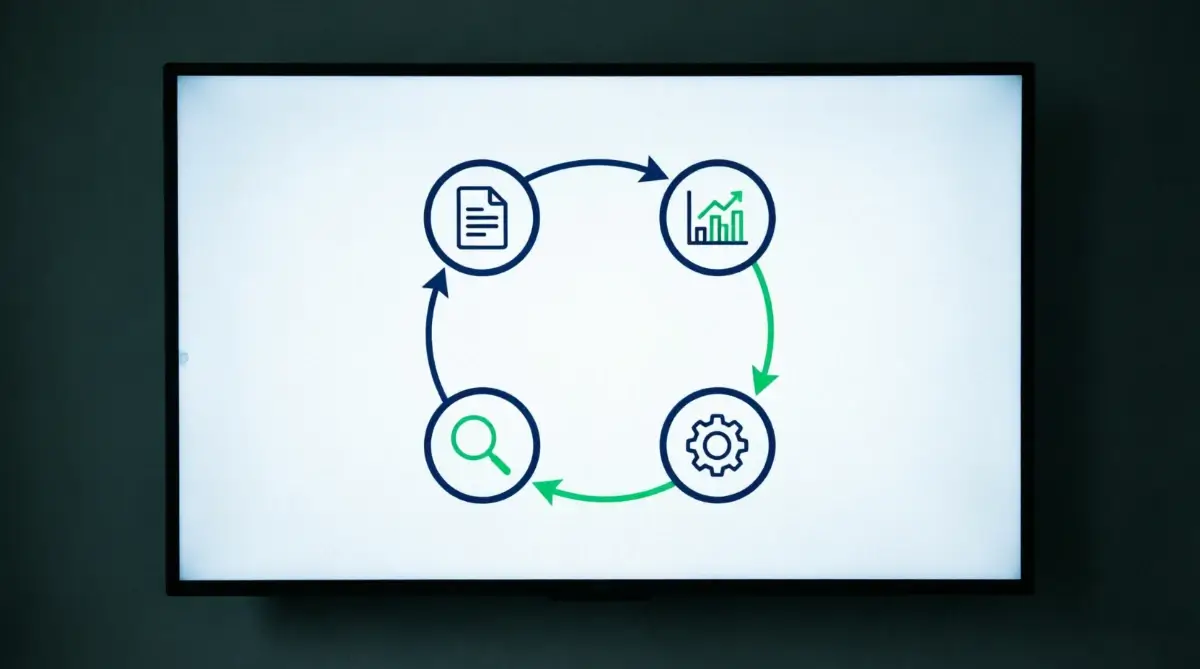
The method of collect‑data‑analyze‑adjust loops perfectly into trading. I run batches of trades, identify which conditions correlate with better results, and eliminate what shows low odds. The repetition is not mindless; it is probabilistically intelligent iteration. Every cycle tightens the edge, removing noise and amplifying signal whether the subject is vocabulary or price action.
This is simple in concept yet demanding in practice: act, measure, analyze, adjust, repeat. Each step requires honesty. Acting without measurement is gambling. Measuring without analysis is data hoarding. Analyzing without adjusting is intellectual exercise. And adjusting without repeating is just tinkering. The full cycle, executed faithfully, is a machine for turning uncertainty into edge.
I now apply this to every area of my life where I want to improve. My fitness routine, my reading habits, my sleep schedule are subject to the collect‑data‑analyze‑adjust cycle. The odds mindset transformed me from a passive recipient of outcomes into an active manager of probabilities. I do not control the results, yet I control the process that tilts the results in my favour.
Why Short‑Term Setbacks in Learning Mean Nothing in the Long Curve
A bad day of language practice never meant the method was broken, just as a cluster of losing trades does not invalidate a tested edge. The odds mindset keeps me from overreacting to the noise in any learning curve, whether it is vocabulary or price action. The curve bends upward over time if the daily actions carry positive expectancy; the dips are just the price of admission.
The price of admission is a concept I wish I had understood earlier. Every edge has a cost: the losing trades, the bad days, the moments of doubt. That cost is not a sign that the edge is failing; it is the fee you pay to access the edge’s long‑term positive expectancy. When I was learning English, the cost was days of frustration when nothing seemed to stick. When I trade, the cost is the losing streaks that test my commitment. In both cases, the only wrong response is to stop paying the fee before the edge has time to deliver.
The long curve of learning also teaches humility no matter how skilled I become in a language or in trading, there will be days when I feel like a beginner again. Those days are not setbacks; they are reminders that variance operates at every level of expertise. A master trader still experiences losing streaks. A fluent speaker still has days when the words will not come. The difference is that the master does not interpret those days as evidence of decline he sees them as the natural texture of a long‑term upward trend.
The Discipline of Repeating the Cycle Without Emotional Attachment
I learned that both language learning and trading require a daily rhythm that I follow regardless of how I feel. The process is not exciting, yet it is effective. By repeating the same steps practice, review, adjust without emotional attachment, I let the law of large numbers work in my favour. Emotional attachment to daily results is the enemy of the long‑term edge; disciplined detachment is its greatest ally.
Disciplined detachment is deeply about the long‑term outcome. I simply do not let the short‑term fluctuations dictate my emotional state. When I have a bad day of practice, I acknowledge it, record it, and show up the next day. When I have a losing trade,the emotions come and go, yet the actions remain constant. That constancy is what the law of large numbers rewards the market does not owe me consistency I owe it to myself.
Removing the Emotional Spikes That Once Ruled My Daily Life
Thinking in odds does more than improve my trading; it removes the emotional spikes that used to control my entire day. When I stopped interpreting every outcome as a personal verdict, the highs and lows flattened into a manageable level captures that shift and why it makes sustainable performance possible.
How an Odds Mindset Smooths the Daily Roller Coaster of Outcomes
The market no longer sends me into despair after a loss into euphoria after a win, because I see both as normal samples from a distribution. That flat emotional line is a direct result of probabilistic thinking. I now move through the day consistency and unhurried, regardless of what the charts did. The roller coaster was never about the money; it was about the meaning I attached to each outcome when the meaning dissolved, the ride stopped.
The emotional spikes were exhausting in ways I did not fully appreciate until they were gone. After a winning day, I would be wired, unable to sleep, replaying every successful trade in my mind. After a losing day, I would be drained, irritable with my family, dreading the next session. The market was not just affecting my account; it was running my entire emotional life. The odds mindset gave me back my evenings, my weekends, my relationships. Trading became a job rather than an emotional occupation, and that shift was worth more than any profit I have ever made.
The smoothing of emotional spikes also improved my decision‑making speed. When I am not riding a wave of euphoria that leads into despair, I can evaluate a setup in seconds rather than minutes. That speed has a compounding effect of its own: more setups evaluated means more opportunities captured, and more opportunities captured means a larger sample, which means the edge expresses itself faster the odds mindset accelerates everything it touches.
The old me needed a guarantee before acting; the new me understands that a positive probability is enough to justify moving forward highlights the liberation that comes from making decisions based on odds rather than on a need for absolute assurance. It is the difference between being stuck and being in motion.
Why a Favorable Probability Is Enough to Justify Consistent Action
I no longer ask, “Will this work out?” I ask, “Over many attempts, does the expected result make the effort worthwhile?” If the answer is yes, I act and I keep acting until the sample is large enough to evaluate. That shift alone has opened doors that certainty‑seeking kept locked. Certainty is a cage; probability is a key. The cage feels safe, yet it holds you in place. The key opens a door to action, where the only way to learn the true odds is to step forward and collect data.
Certainty‑seeking is a form of procrastination disguised as prudence. I told myself I was being careful, waiting for the right moment, doing more research. In reality, I was afraid of being wrong, and I was using the need for certainty as an excuse to avoid action. The probabilistic mindset removes that excuse. I do not need to be certain; I only need a positive expected value if the expected value is positive, inaction becomes the riskier choice.
The shift from certainty to probability also changed my relationship with risk. Before, I saw risk as something to be avoided, because any loss was a failure. Now I see risk as the necessary input to any positive‑expectancy activity. The question is not “Is this risky?” but “Is the expected return worth the risk?” That reframing has allowed me to take calculated risks in my career, my investments, and my personal growth that the certainty‑seeking version of me would never have considered.
Trusting the Long‑Term Distribution Over Any Single Moment
The ultimate expression of thinking in odds is placing my trust not in a specific outcome but in the shape of the distribution over time that truth revealed: I do not need today to confirm anything, because I know that over a large enough series, the edge will express itself. That perspective is worth more than any temporary win.
How the Long‑Term View Protects Me from Panic and Greed
When I hold the long‑term distribution in mind, a sudden losing streak feels like a minor dip on a curve that points upward. I do not panic, and I do not chase the market after a few winners either. The big picture keeps me balanced, and balance is what lets the edge compound. Panic and greed are short‑term emotions that feed on the immediate moment; the long‑term view starves them by making the moment insignificant.
The long‑term view also provides a practical reference during market extremes. When volatility spikes and everyone around me is either panicking or euphoric, I return to my historical data. I look at the distribution of outcomes my edge has produced over hundreds of trades, and I remind myself that the current moment is just one data point in that distribution. The distribution is the truth; the moment is the illusion. Trusting the truth over the illusion is what keeps me in the game when others are being shaken out.
The long‑term view also provides a way to evaluate new opportunities. When someone presents me with a trading idea or a life decision, I no longer ask whether it will work. I ask what the distribution of outcomes looks like if I apply the idea consistently over a hundred instances. That question clarifies more than any pro‑con list ever could. It forces me to think in probabilities rather than in hopes, and it has saved me from countless poor decisions that looked attractive in the short term.
The Mindset Shift Worth More Than Any Single Winning Trade
The single greatest asset I now possess is not a trading strategy but the mental shift to seeing everything in odds. That shift is worth more than any single winning trade because it applies to every part of my life and pays dividends forever explores why this internal change is the real treasure.
Why the Shift to Probabilistic Thinking Is the Real Payout
Any one winner can be spent, yet the ability to approach every challenge financial, personal, educational with a probability lens is a permanent upgrade. This shift reduces stress, improves decisions, and keeps me moving forward even when results are unclear. It is the foundation beneath every other gain a winning trade buys something to eat; the odds mindset buys a lifetime of better decisions.
The permanence of the shift is what makes it invaluable. Strategies come and go; markets change; edges erode. Yet the ability to think in probabilities, to evaluate decisions based on expected value, to trust the long‑term distribution that ability transfers to any area and any era. It is the meta‑skill that generates all other skills. I could lose my entire trading account tomorrow and rebuild it, because the mindset is intact the mindset is the real capital.
How This New Lens Transforms All Areas Beyond Trading
I now handle setbacks in health, learning, and work with the patience I use in drawdowns a single bad day does not define the trajectory; I keep executing the positive actions and trust the cumulative effect. The odds mindset became my way of thinking, not just a trading tool. It changed how I parent, how I learn, how I recover from failure every part of life is now viewed through a probabilistic lens.
Parenting was the area where this shift surprised me most I used to react to every difficult moment with my child as if it were a verdict on my parenting. A tantrum meant I had failed. A bad grade meant I was not doing enough. The probabilistic lens changed that. I now see parenting as a long‑term distribution: most days, the actions I take are positive, and over time, those actions shape a healthy, resilient child. A single bad day is noise that perspective has made me a calmer, more present father.
The Compound Effect of Trusting Process Over a Lifetime
Just as a small edge compounds into a meaningful equity curve over many trades, a lifetime of probability‑based decisions builds an extraordinary result. I no longer chase breakthroughs; I stack the days where I do the right thing, and I let the long‑term distribution do what it does the compound effect is silent until it is undeniable.
The silence of compounding is why so few people trust it in the early journey, the results look unremarkable. The equity curve is flat, the language skills are halting, the fitness gains are invisible. Yet beneath the surface, the process is building momentum. Every correct action is a deposit in a long‑term account that will eventually pay out. The odds mindset gives me the patience to wait for that payout, because I have seen the math and I know the curve bends upward if I keep showing up.
The compound effect of trusting process also applies to relationships. A single kind gesture may go unnoticed, yet a thousand kind gestures build a bond that withstands the occasional conflict the probabilistic patience that governs my trading now governs how I show up for the people I care about. I do not expect every interaction to be perfect; I expect the cumulative weight of many positive interactions to outweigh the inevitable negative ones that expectation, grounded in the math of repeated actions, has made me a better partner, friend, and parent.
The Birth of a Trader Who Never Needs to Be Right Again
The final identity that thinking in odds created is a trader and a person who has no emotional need to be right on any single occasion. I find peace in knowing my process is sound, and I let the outcomes fall where they may encapsulates that new self‑concept.
I do not care if my next trade wins or loses; I care that the conditions were met and the risk was appropriate. A correct forecast that came from luck holds no value for me. The only thing I bank on is the expectancy built into a thousand disciplined repetitions a random prediction feeds the ego; a positive expectancy feeds the account. I choose the account.
The preference for expectancy over forecast also changed how I consume market information. I used to seek out analysts who made bold predictions, hoping to find someone who could tell me what would happen next. Now I ignore forecasts entirely. I look for data that helps me refine my edge, and I let the predictions mine and others’ pass by unheeded. A forecast is a story; an edge is a statistical reality. Stories are entertaining; realities pay the bills.
Not needing to be right also allows me to change my mind without shame. When new data suggests a different approach, I can pivot without feeling that I am admitting failure. The old approach was not wrong; it was simply a hypothesis that the data did not support. That reframing turns every change into a learning step rather than a confession of error. In a probabilistic framework, changing your mind is a sign of intelligence, not weakness.
The freedom from needing to be right has also made me a better listener when I am not defending a forecast, I can hear what the market is actually saying. I can watch price action without imposing my expectations on it. That openness has improved my pattern recognition more than any deliberate study the market speaks clearly to those who are not shouting their own predictions over it.
Living a Life Where the Long‑Term Edge Shapes Every Decision
Thinking in odds has become the filter through which I see every choice from how I spend my time to how I manage setbacks that expands the core framework showing that the patience and probabilistic honesty that governs my trading and my entire existence.
How I Apply the 100‑Instance Test to Daily Habits and Goals
I now evaluate new habits by asking, “If I do this every day for a 100 days, what is the likely result?” That removes the pressure of immediate perfection and lets me build consistency. The 100‑day lens turns nebulous goals into probabilistically honest experiments. A goal without a sample size is a wish; a goal with a 100‑day test is a hypothesis I can verify.
The 100‑day test also forces me to be realistic about what a habit can deliver. If I want to improve my fitness, I do not ask whether today’s workout made me stronger. I ask whether a hundred workouts, done consistently, will produce a measurable improvement. The answer to the first question is usually no; the answer to the second is almost always yes. That shift in framing turns a daily chore into an investment in a known outcome.
The 100‑day test has become my default response to any new ambition. When I wanted to improve my writing, I committed to writing 500 words every day for a hundred days, with no judgment on quality. By day seventy, the improvement was undeniable. By day one hundred, the habit was ingrained, and the quality had followed the quantity. The probabilistic approach to habits transforms them from acts of willpower into experiments where the outcome is already known, provided the process is followed.
Why Short‑Term Failures Are Just Data Points, Not Final Verdicts
A missed workout a language session practice is no more a catastrophe than a losing trade. I record the data, note any pattern, and show up the next day. This refusal to dramatize a single miss is the direct consequence of thinking in odds. Drama is what happens when a single data point is mistaken for the whole distribution; calm is what happens when the distribution is kept in view.
Dramatizing a single failure also creates a narrative that can become self‑fulfilling. If I miss one workout and tell myself I am undisciplined, that identity makes the next miss more likely. The probabilistic mindset interrupts that narrative. A miss is just a miss. It does not mean anything about my character. I note it and move on. That interruption is the difference between a temporary setback and a permanent derailment.
The refusal to dramatize failure also makes it easier to start new things. When I began learning my third language, I knew the first weeks would be filled with mistakes and confusion. That knowledge did not discourage me; it prepared me. I expected the early failures, and I had already decided they would not stop me. The probabilistic mindset does not eliminate failure; it budgets for it a budgeted failure is just an expense, not a crisis.
The Consistent Accumulation of High‑Probability Actions Over Time
I focus on filling my days with actions that have a positive expected value, even if each one is small those positive‑expectancy actions compound into a life that looks fortunate from the outside yet is simply probabilistically sound fortune favour the prepared, and the prepared are those who stack high‑probability actions without demanding immediate proof.
Stacking high‑probability actions is not glamorous it means choosing the salad over the burger, the hour of study over the hour of television, the early morning over the late night. Each individual choice is unremarkable, yet the cumulative effect over a lifetime is extraordinary. The odds mindset gives me the motivation to make those small, correct choices, because I know the math I do not need to see the results today. I know they are coming.
The accumulation of high‑probability actions has a secondary effect that is easy to overlook: it builds self‑trust. Every time I show up and execute a positive‑expectancy action, I am depositing evidence into my own psychological account. Over time, that account grows large enough to withstand any single withdrawal. When I face a major setback now, I do not spiral into self‑doubt, because I have a long history of showing up that proves I am capable. The process does not just build results; it builds the confidence to keep pursuing results.
Trusting the Distribution: The Final Lesson of a Probabilistic Life
I no longer need to control outcomes, only to control my process. That trust in the distribution is the most liberating realization of all. It is the consistency behind every trading decision and every personal choice, and it is the true definition of thinking in odds. The distribution does not care about my feelings, my hopes my fears. It simply unfolds according to the probabilities I have aligned myself with. Aligning with the right probabilities is the only task; everything else is noise.
Trusting the distribution is not passive fatalism it is active alignment I am constantly evaluating which probabilities I am aligning myself with, and I adjust my actions to improve those probabilities. The distribution will deliver whatever it delivers, yet I control the inputs that shape it. That is the final, liberating truth of a probabilistic life: I am not responsible for the outcome I am entirely responsible for the process that tilts the outcome in my favour. That is enough. It has always been enough.
The final peace of a probabilistic life is not the peace of having all the answers it is the peace of knowing that the answers will emerge from the process, over time, if I keep the process intact. I do not need to solve every problem today. I need to take the next high‑probability action, and then the next, and then the next. The distribution handles the rest. That trust is not naive; it is earned through thousands of repetitions where the process delivered exactly what the math said it would I trust the distribution because I have tested it, and it has never failed to reward consistency.